Liftonus
Lifting Services in Disaster Recovery: Enhancing Response and Relief Efforts
In the aftermath of disasters, from hurricanes to earthquakes, the ability to respond quickly and effectively is vital to saving lives and restoring order.
Lifting services play a pivotal role in these efforts, providing the heavy lifting capacity essential for clearing debris, delivering aid, and reconstructing vital infrastructure.
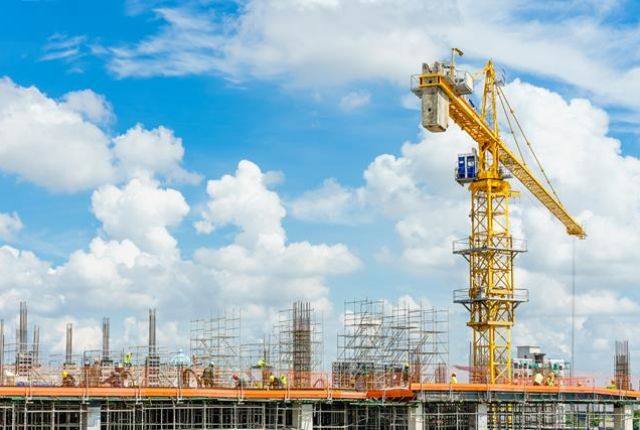
This blog explores the indispensable contributions of lifting services to disaster recovery and relief efforts, detailing how they support emergency response teams and aid organisations in bringing swift relief to affected communities.

Rebuilding Infrastructure with Lifting Services
As recovery progresses, lifting services become integral to the rebuilding phase, where the restoration of critical infrastructure takes precedence. This includes the repair of bridges, roads, and public utilities that are essential for normality.
Lifting cranes and other machinery are used to place new girders for bridges, position heavy materials for road repairs, and install large components like water tanks and power generators.
A significant example of this was observed in the reconstruction efforts following major earthquakes, where lifting services helped to quickly restore damaged infrastructure, which is crucial for economic recovery and community resilience. The strategic placement of heavy prefabricated sections of infrastructure by skilled crane operators can significantly speed up the construction process, reducing the overall downtime for essential services.
In both debris removal and reconstruction, the efficiency and safety of lifting operations hinge on the expertise of the operators and the reliability of the equipment used. These stages are crucial not just for the physical rebuilding of areas affected by disasters but also for the psychological reassurance of the communities involved, marking the transition from emergency response to long-term recovery.
Telephone:
01377 310435

Conclusion & About Liftonus
Lifting services are indispensable in the aftermath of disasters, playing a critical role from the initial response to the final stages of recovery and rebuilding.
As technologies advance and the expertise of lifting personnel continues to grow, these services become even more pivotal in enhancing the speed and safety of disaster recovery operations.
For organizations and communities aiming to bolster their disaster response capabilities, investing in advanced lifting solutions and continuous training is imperative.
Liftonus specialises in providing advanced lifting solutions tailored to a diverse range of industries, including construction, renewable energy, and infrastructure development.
They offer a comprehensive suite of services encompassing everything from project planning and execution to training and maintenance.
Known for innovation, Liftonus integrates cutting-edge technology and rigorous safety protocols to enhance operational efficiency and safety. Their expertise in handling complex lifting tasks makes them a go-to provider for projects requiring precise, heavy lifting capabilities.







I used Steven Wilson’s SME lifting service recently and I have to say that I am thrilled with the service received. We had a lot of stuff that was in quite a state and there was no safe way to lift it without risking injury or damage. As a result, I knew that I had to bring in a professional lifting service for the job - and I am very glad that I did!
Steven was diligent from the outset with some effective preparation and planning before getting to work. He was incredibly meticulous while working and made sure that our site was safe and clear of hazardous items. He even managed to streamline some of our existing practices so that they were safer and easier for my team. What’s more, he didn’t impact our daily operations in the slightest by working to our schedule.
I can wholeheartedly recommend Steven's SME lifting service. From start to finish, he embodied professionalism and went the extra mile to get the job done. I only wish that we had used his services sooner - we could have streamlined how we work much faster and saved ourselves a lot of grief.
We used lift on us to transport, install and commission a silo unit into a site with very restricted road access and confined work area.
We were advised to use a number of expensive and complex techniques until we spoke with Steve who came up with a very cost effective and simple solution.
Before the silo was delivered all involved were fully briefed and instructed on the installation procedure and safety protocol and any issues were discussed and resolved prior to the work been commenced.
The installation and commissioning went smoothly without delays, I would recommend using lift on us to anyone looking for a highly professional organisation.
Steven Wilson's services have been a game-changer for us. Getting our lifting solutions right has been a struggle for years now because we've had injuries in and around the workplace that make getting properly insured a nightmare, not to mention dealing with the struggle of helping employees through the time they spend injured!
All of our work has become significantly more efficient since Steven worked with our team. Our processes were overhauled and everything has been made far safer throughout. Where we previously ran a range of risks without even realising it, Steven coming in encouraged us to transition our working methods and procedures to a much safer state of affairs. If you've been struggling with your procedures, I'd 100% recommend contacting Steven.
Not only are his services great, but working with Steven is an absolute pleasure. He is a very forward-thinking professional with a focus on the task at hand, and he achieves this all whilst working with a smile.
His time with us passed by in a flash and, despite our issues being solved, it was a shame he had to go.
I highly recommend these services!